Sustainable homes that last. Every new home we build meets 7 stars as a minimum, and many go well beyond. Lower bills, steadier temperatures and a better EER when you sell.
Since the NCC 2022 changes, new homes in the ACT must achieve a 7-star NatHERS energy rating, and a whole-of-home energy assessment now also considers heating, cooling, hot water and solar.
We treat 7 stars as the starting point. Good orientation, the right glazing, careful insulation, airtight construction and efficient electric systems make a home cheaper to run and far more comfortable through Canberra’s frosty winters and hot summers.
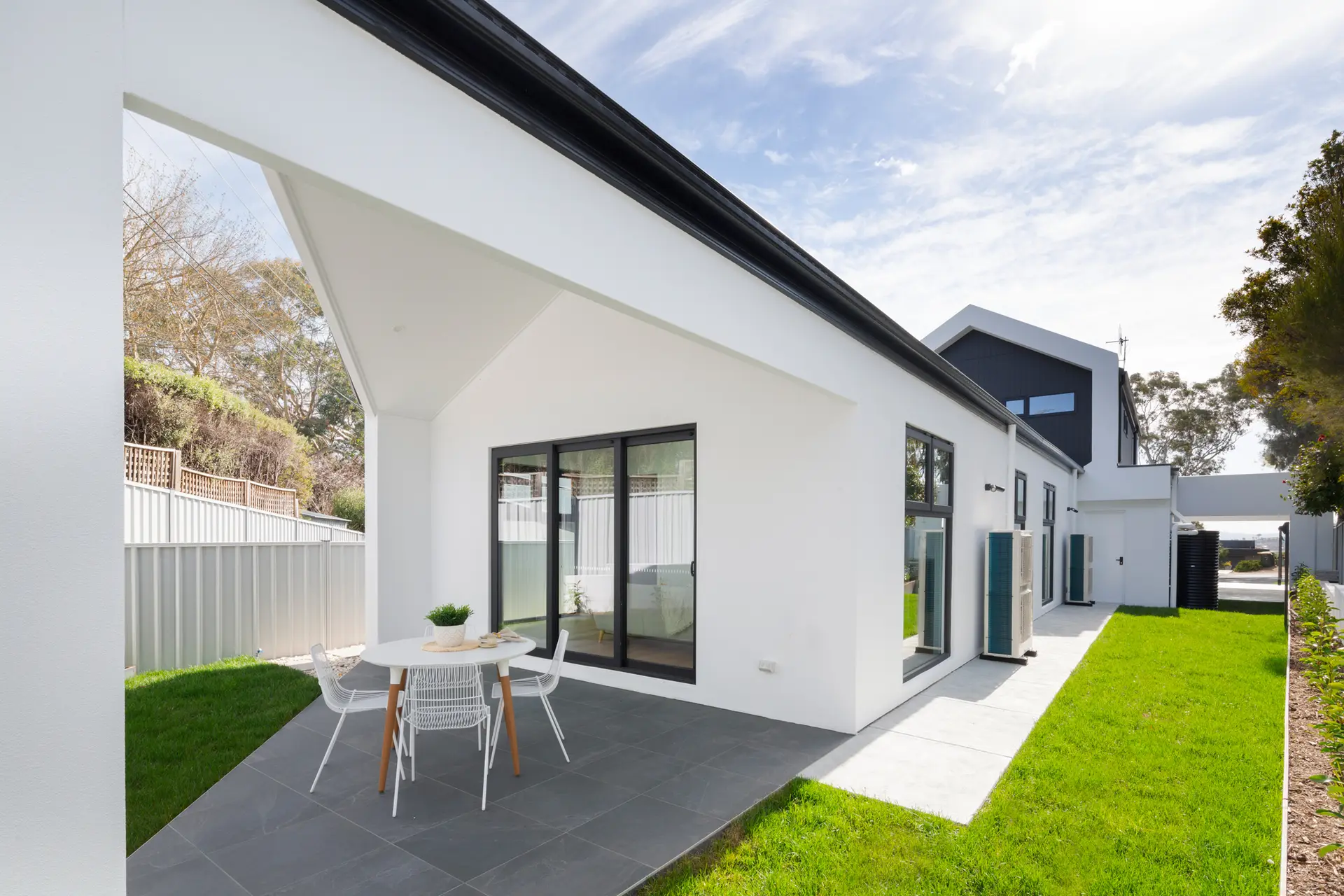
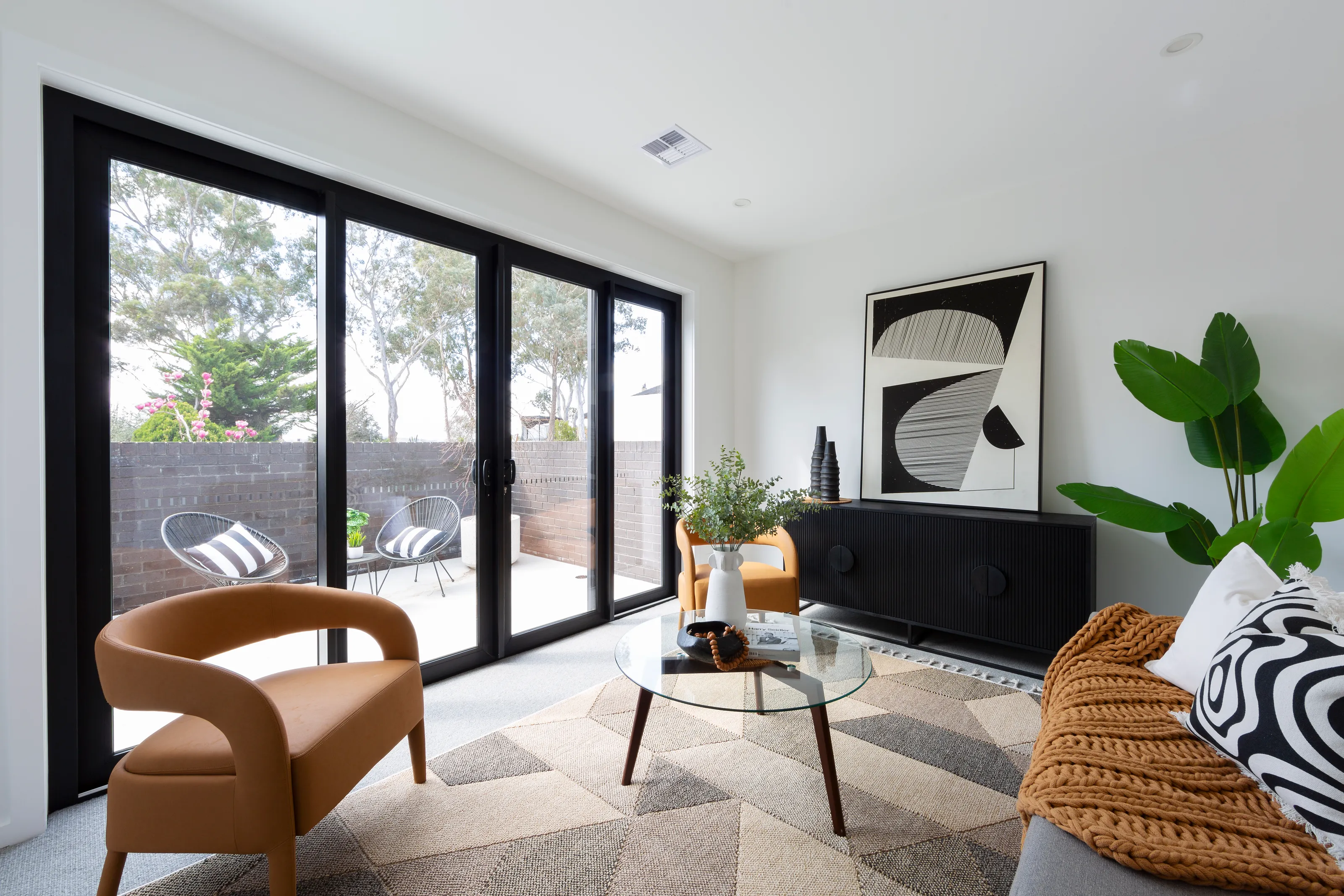
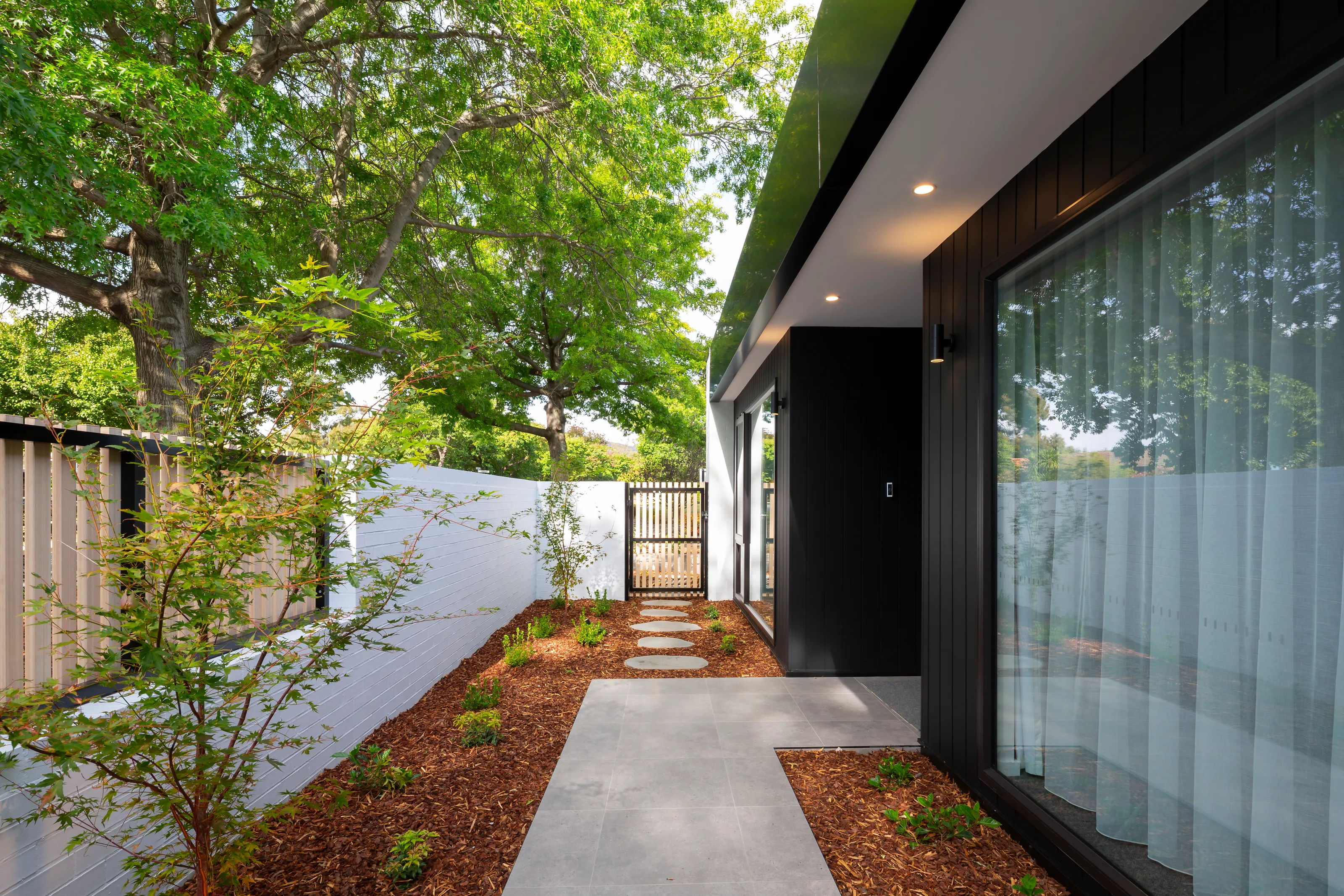
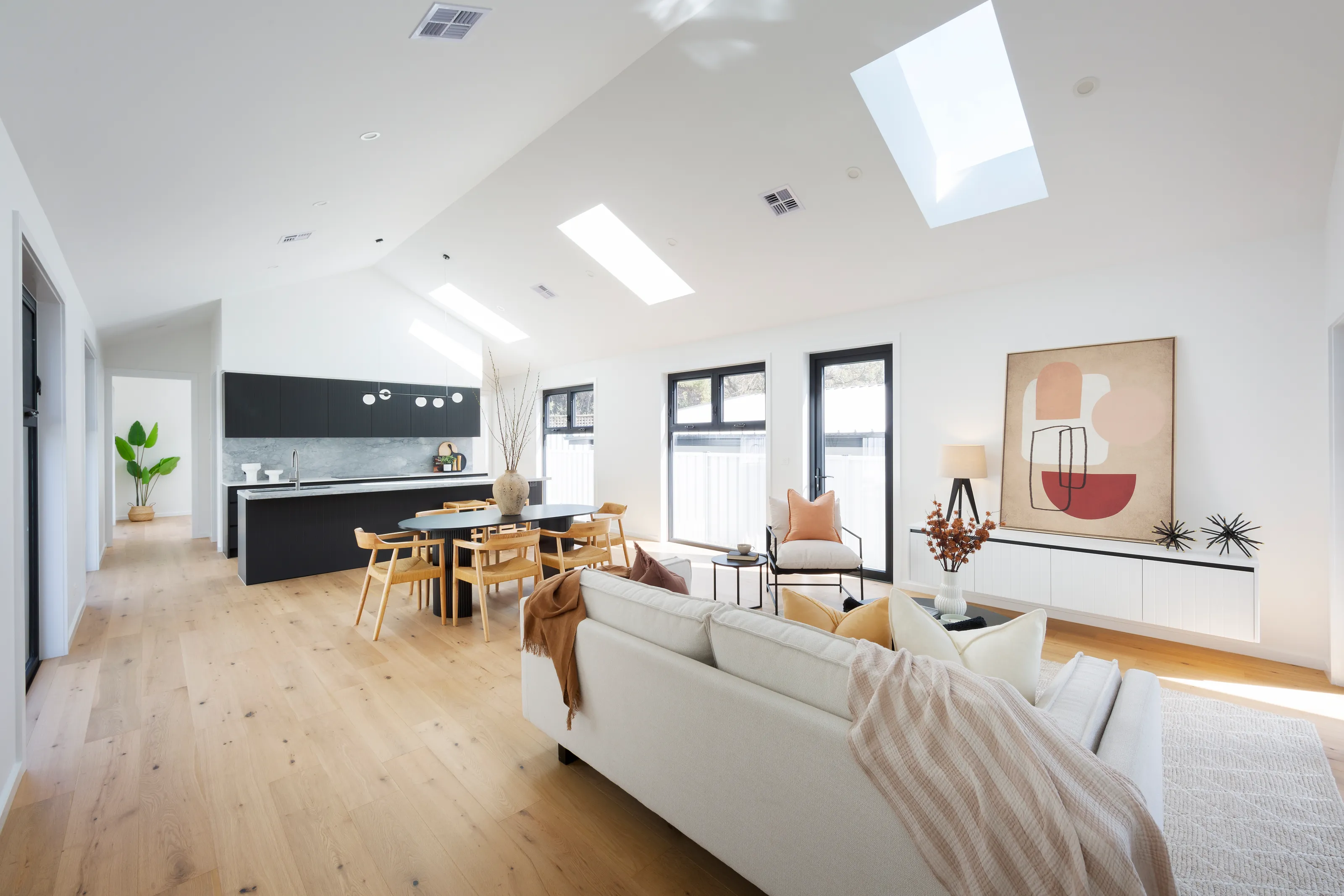
Our Chapman dual occupancy, winner of HIA ACT & Southern NSW Townhouse Development of the Year, achieved EER ratings of 7.5 and 7.2 stars with an airtightness result of around 4 air changes per hour at 50 Pa. The ratings were modelled at 10 air changes an hour, so the homes perform better than their stars show.
Healthy home specialist
Sustainability is a standard
A genuinely ‘fixed’ price
Why it matters
The key benefits, every day you live there.
Benefit 1
Comfort and health
Good orientation, insulation and glazing hold a steadier temperature in every room, so the home feels right in every season.
Warmer in winter, cooler in summer
Fewer draughts and cold spots
Less condensation and mould risk
Benefit 2
Lower running costs
A home that holds its temperature needs far less heating and cooling, so the bills stay lower for as long as you live there.
Less heating and cooling needed
A smaller system does the job
Your solar goes much further
Benefit 3
Built to last
Less energy used every year, and careful detailing that protects the frame, so this is a home you keep, not one you replace.
Lower energy use for the life of the home
Built beyond the 7-star minimum
A forever home, not a 30-year one
What you get
How we build better than the minimum
Passive solar design
Living areas facing north, shading for summer sun and thermal mass where it helps.
Insulation done properly
No gaps, compressed batts or missing corners — the details that make ratings real.
Airtight construction
Membranes and taped junctions that stop draughts and protect against condensation.
Better windows
Double glazing and thermally broken frames, sized and shaded to suit the orientation.
All-electric ready
Heat pumps, induction and solar-ready designs that suit the ACT’s electrification push.
A better EER
A higher Energy Efficiency Rating helps when you sell or lease in the ACT.
From STRESS-FREE to TURNKEY
How we hit (and beat) 7 stars
01Site visit
A relaxed chat about your home, block and budget. Then we walk the site together.
02Design
Our designers, or your own architect, shape a home around your site, style and budget.
03Fixed pricing
Your home is built in 3D and measured, with every trade quoted twice. One clear price.
04Approvals
We manage approvals, certification and disconnections for you, in the ACT or NSW.
05Build
Our own carpenters build your home, with site meetings, photo updates and a direct line to Mark.
06Handover
A final inspection together, then we hand over the keys. No surprises.
07Aftercare
Check-ins at 1, 6 and 12 months as your home settles, plus a 10-year structural warranty.
Why Freedom
Three reasons clients choose to build with us.
Stress-free to turnkey
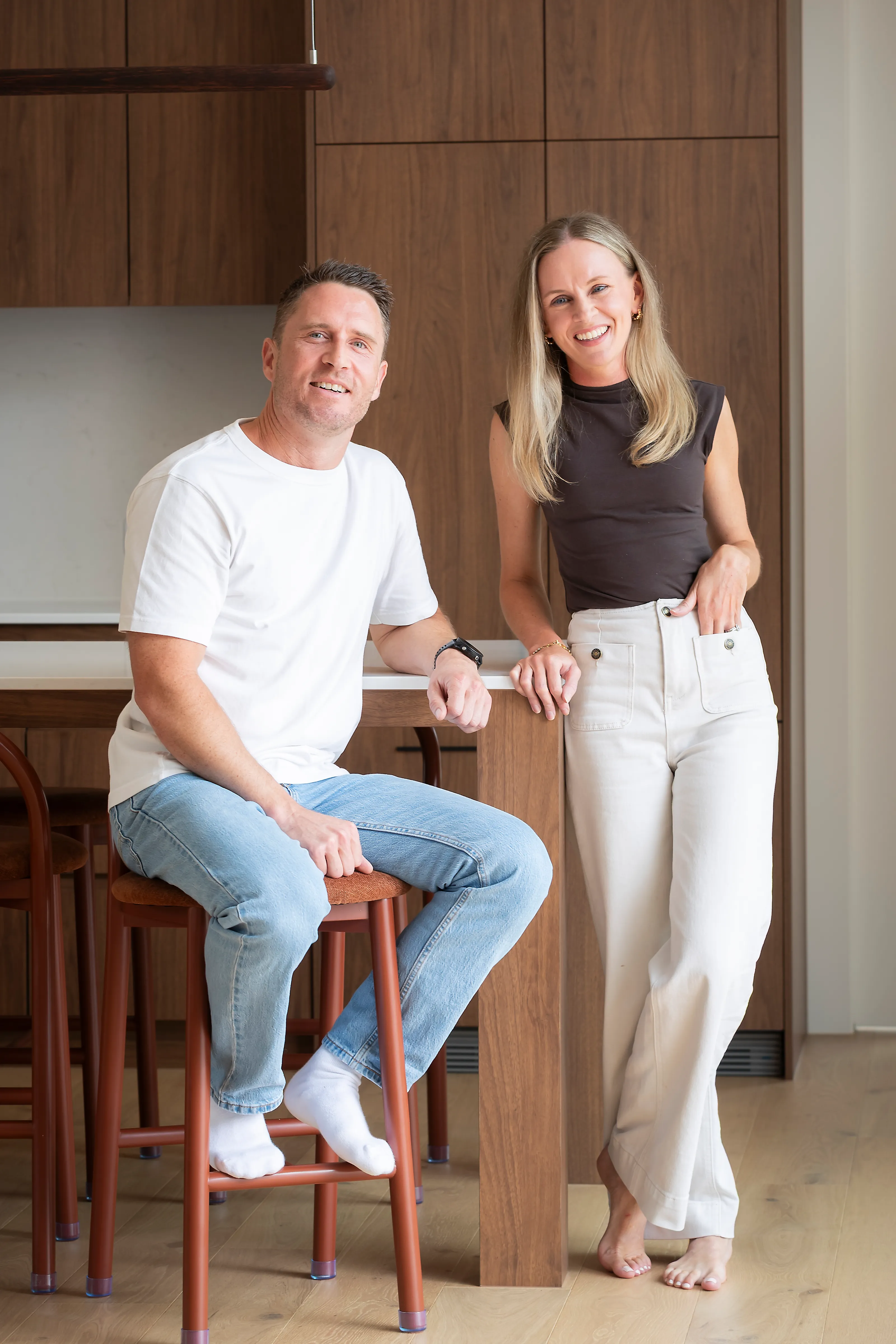
We build five homes a year so we can build them better. You deal directly with Mark, not a revolving door of site supervisors, from first chat to keys.
Designed to be built
Design is in-house, so every decision is tested against budget, buildability and performance before construction begins. 98% buildability accuracy on recent design & construct homes.1
Healthy by design
Airtight but breathable homes with fresh air, good light and safe materials. Mark is a certified Passive House tradesperson, and Mark and Maddie trained with a building biologist.
1 On recent projects where Freedom managed both design and construction, final costs averaged 2% above the original price, excluding client-requested variations. Freedom’s project experience, not an industry benchmark.
Common questions
Energy efficiency questions
What makes a Freedom home sustainable?
Four things. It needs far less energy to run, because of how it is oriented, insulated and sealed. It is all-electric and ready for solar and a battery. It is built from healthy, low-VOC materials that are chosen to last. And when we knock down the old house, we recycle up to 75% of it.
Are you a sustainable builder?
Yes. Freedom Built is an HIA GreenSmart member, and Mark is a certified Passive House tradesperson. Every new home we build reaches at least 7 stars, is all-electric and uses low-VOC materials. On recent knockdown rebuilds we have recycled 70 to 75% of the original house.
What happens to the old house in a knockdown rebuild?
It is taken apart, not just crushed. Bricks, concrete, metals and timber are sorted and sent for recycling or reuse. On our Chapman and Watson projects, 70 to 75% of the old home was recycled.
Is building new more sustainable than renovating?
It depends on the house. Keeping a sound structure saves materials. But a cold, leaky house can use many times the energy of a well-built new one for the rest of its life. We look at both and tell you honestly which makes more sense for your home.
Do all new homes in Canberra need 7 stars?
Yes. New homes in the ACT must achieve at least a 7-star NatHERS rating under the current National Construction Code, with a whole-of-home energy assessment as well.
Is a 7-star home more expensive?
There is some extra cost in insulation and glazing, but it is recovered through lower energy bills and a more comfortable home. Designing for performance early keeps the cost down.
What is an EER?
The Energy Efficiency Rating is the ACT’s star rating for a home. It must be disclosed when you sell or lease, so a better EER can add real value.
Can you improve the energy rating of my existing home?
Yes. Renovations and extensions are a great opportunity to add insulation, upgrade windows, seal draughts and add efficient heating, cooling and hot water.
What is an energy-efficient home?
A home that needs much less energy to stay comfortable. It gets there through good orientation, insulation, airtightness, better windows and efficient electric appliances, all working together.
What features make a home energy efficient?
Five things do most of the work: living areas that face north, continuous insulation with no gaps, a well-sealed building wrap, good windows with the right shading, and planned ventilation. Efficient heat pumps and solar come after that.
What is the difference between an energy-efficient home and a high-performance home?
An energy-efficient home is designed to use less energy, and is rated on paper. A high-performance home goes further and proves it on site, with a tested airtight wrap, checked insulation and inspections during the build. Passive House is the certified top level of the same idea.
Does orientation really matter?
Yes, a lot. In Canberra, north-facing living areas with the right eaves let the low winter sun in and keep the high summer sun out. It is the cheapest performance gain there is, because it costs nothing extra if it is designed in from the start.
What insulation is best?
How it is installed matters more than the brand. Insulation that is continuous, fitted snugly and kept dry will beat a higher-rated product with gaps. We photograph and check it before the walls are closed.
Can an energy-efficient home still be a custom design?
Yes. Energy efficiency is about how the home performs, not how it looks. Every home we build is designed for its own block, and performance is worked into the design from the first sketch.
Are energy-efficient homes healthier to live in?
Yes. Steadier temperatures, fewer draughts and less condensation mean less mould and cleaner air. That matters most for children, older people and anyone with asthma or allergies.
How long do the benefits last?
For the life of the home. The performance is built into the structure, the insulation, wrap and windows, so it keeps working for decades with normal maintenance.
Are your homes all-electric?
Yes. The ACT no longer allows new gas connections for new homes, so every new home we build is all-electric, with heat pumps for heating, cooling and hot water, and induction cooking.
Do I need solar panels?
They help, but they are not the first step. Cut the energy the home needs first, then add solar. A home that needs less can run largely on a smaller system. We make every new home ready for solar and a battery.
What is a net zero home?
A net zero home makes as much renewable energy over a year as it uses. The steps are simple: design the home to need very little energy, make it all-electric, choose efficient appliances, then add enough solar to cover what is left. In Canberra you have a head start, because the ACT already buys 100% renewable electricity for the grid.
Do you build to the Passive House standard?
Yes. We build homes to Passive House principles, and can take a home through full certification if you want it. See our Passive House page for how it works.

 Healthy home specialist
 Sustainability is a standard
 A genuinely ‘fixed’ price